
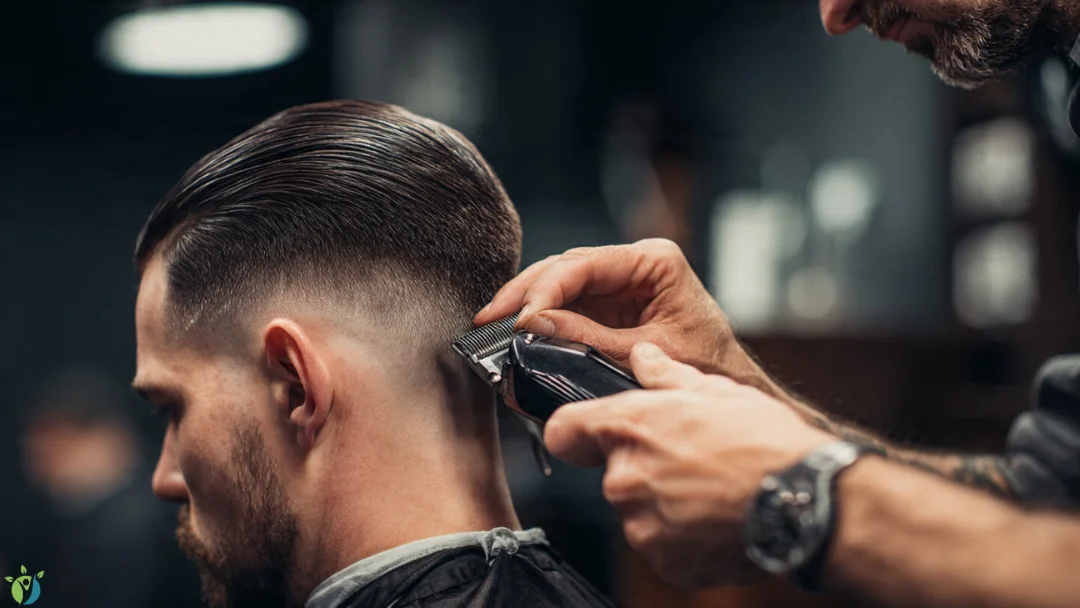
In every great barbershop, there’s one tool that defines the craft more than anything else: the clipper. Whether it’s shaping a classic fade, building a smooth taper, or detailing a sharp hairline, the clipper is the backbone of modern men’s grooming. At The Realest Barbers, clipper work isn’t just a technical step in a haircut. It’s a language. Each movement, each guard change, each angle tells a story about precision, rhythm, and control.
Today, we’re stepping behind the chair to break down the essential clipper techniques that create the clean fades and tapers our clients rely on. From the foundation to the final detailing, these are the skills that separate a standard cut from a standout on
The foundation: Understanding the clipper
Before creating any fade or taper, a barber has to understand how the clipper interacts with the hair. The weight, the blade type, the motor speed, and even the balance in the hand influence the result. A well-maintained clipper with a sharp blade moves through hair effortlessly, allowing smooth blending lines and even cutting.
Most of the techniques you’ll see in fades rely on three basic motions:
1. Straight cutting
A steady motion used to remove bulk and build the basic shape.
2. Clipper-over-comb
A blending technique that allows for more controlled transitions, especially around crowns or uneven growth patterns.
3. Flick or C-motion
This is the key to clean fades. The clipper moves in a curved motion, lifting away from the head to soften lines instead of chiseling them in.
Mastering these basics is essential before the more advanced techniques even begin.
Clean fades: Where precision meets patience
Few cuts showcase a barber’s skill like a proper fade. A fade demands patience, consistency, and an eye for transitions. No two heads fade the same, so a barber has to read the grain, density, and natural curves of the scalp before starting.
High fade
A high fade starts just above the temples, leaving most of the sides tight and compressed. Because the transition sits higher, the blending window is shorter, which means every guard change must be exact. The flicking motion is crucial here, especially around the parietal ridge where the head begins to curve.
Mid fade
The mid fade is versatile and clean, sitting between the temple line and ear level. It offers enough space for smooth transitions without looking too dramatic. Barbers often combine straight cutting to remove bulk first, then ease into the fade using C-motions and controlled scooping.
Low fade
A low fade is subtle but stylish, starting just above the ear or following the natural hairline. It can be more challenging because there’s less room to blend without creating dark spots. Clipper-over-comb becomes especially helpful here to soften heavier areas near the neckline.
Regardless of the fade type, the most important steps remain the same:
• A clear guideline
• Consistent guard progression
• Softening between each level
• Clean detailing at the end
It’s the process that ensures every fade leaves the chair sharp from every angle.
Taper fades: Controlled flow and natural movement
Where a standard fade is bold and structured, a taper fade is all about subtle flow. The taper focuses on three key areas: the sideburns, the neckline, and sometimes the nape edges. These are small zones, but they demand absolute precision.
Barbers rely on shorter, more delicate clipper strokes when tapering. Because the transition is tight and minimal, any heavy handwork shows immediately. The trick is to build the taper slowly, checking symmetry constantly. The neckline is especially important — too high makes the cut look artificial, too low leaves it messy.
A clean taper fade complements almost any hairstyle: waves, curls, messy tops, classic pompadours, textured crops. It adds a subtle touch without being too bold.
The Guards: The language of levels
Every barber has a rhythm when switching guards. The numbers aren’t just sizes — they’re steps in a story.
A typical fade progression might look like this:
0 → 0.5 → 1 → 1.5 → 2 → 3 and beyond if needed
But what matters is not just moving up; it’s also knowing when to go back. Going downward again to hit a shadow line with a lower guard is a secret many seasoned barbers rely on.
Half guards, in particular, are essential for perfecting transitions. They fill the gaps between levels that would otherwise leave a visible line.
Clipper over comb: The blend creator
This technique separates confident barbers from true masters. It requires hand-eye coordination and an understanding of head shape. By holding the comb at specific angles and running the clipper along it, a barber controls weight and texture far better than with guards alone.
Barbers use this method to refine areas like:
• The ridge and crown
• Bulky corners near the temples
• Curly or coarse hair that resists standard fading
• Uneven growth patterns
It’s especially helpful for low fades and tapers where soft blends are everything.
Detailing: The final signature
A haircut isn’t complete until every line is crisp. Detailing is where the barber adds character: shaping edges, smoothing shadows, tightening outlines around the ears, and sharpening the front hairline without over-pushing it.
This step often involves a combination of:
• Zero-gap trimmers
• Corner-work on the clipper
• Using the blade sideways for precision
• Small, almost invisible flicks to remove stubborn shadows
Detailing is where a good haircut becomes a great one.
Why technique matters
Clients see the end result, but barbers see the craft. Every fade, taper, or clean outline is the product of technique layered on technique. That’s why the best barbers never stop learning. They refine their motions, perfect their guard transitions, and stay sharp with every cut.
As a modern barber team Utrecht, this approach defines our work every day; clipper stroke is intentional, every fade is built with patience, and every taper is shaped with care, because mastery is more than tools; it’s a pledge to perfecting the art.